• external style sheet internal inline
    • CSS is applied in this order
  • 4 categories we look at when we’re determining the overall lvl of importance of a CSS rule
    • Position > specificity > type > inheritance

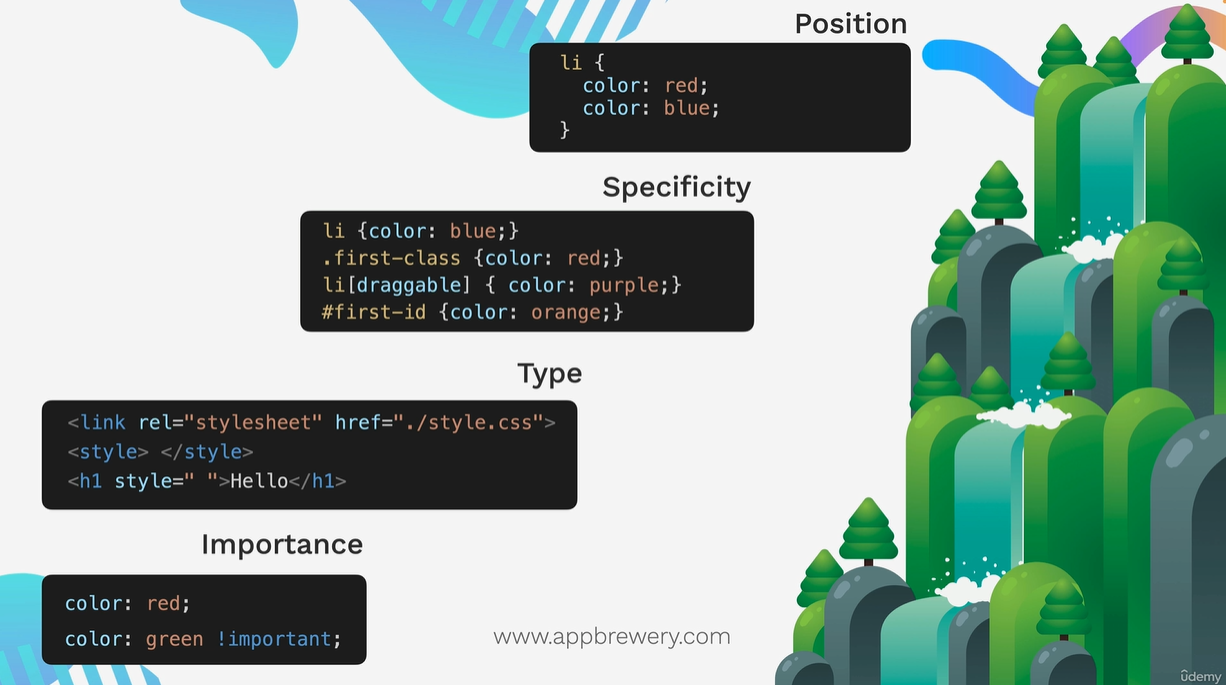
Position

li {
	color: blue;
	color: red;
}
  • red will be applied at the final
  • the lower down in a CSS external file or in an internal style element

Specificity

<li id="first-id" class="first-class" draggable>
 
/* (style.css) the lower, the more specific */
li {color:blue;} /* element */
.first-class {color:red} /* class */
li[draggable] {color: purple;} /* attribute*/
#first-id {color: orange;} /* id */
  • we would see orange

Type

<link rel="stylesheet" href="./style.css"> 
<style></style>
<h1 style=""></h1>
  • External
  • Internal
  • Inline

Importance

  • Important keyword
color: red;
color: green !important;

Examples

<head>
	<style> #an-id { color:green } </style>
</head>
<body>
	<h1 id="an-id" style="color:blue;"> Hello </h1>
</body>
  • Even though id has the highest specificity, the type comes first in the CSS cascade (which indicates inline css has higher priority than internal)
  • so we would see blue