- A collection of SQL queries that are treated as one unit of work
- When you need to do one or more queries to achieve what you logically want in your application
- Logically one thing that cannot be split
- Can change data / be read-only
- Example: Account deposit (3 queries)
SELECT : Check if there’s enough money from the 1st accountUPDATE: Deduct $100 from thyat accountUPDATE Deposit the money in the other account (+ $100)- Diagram
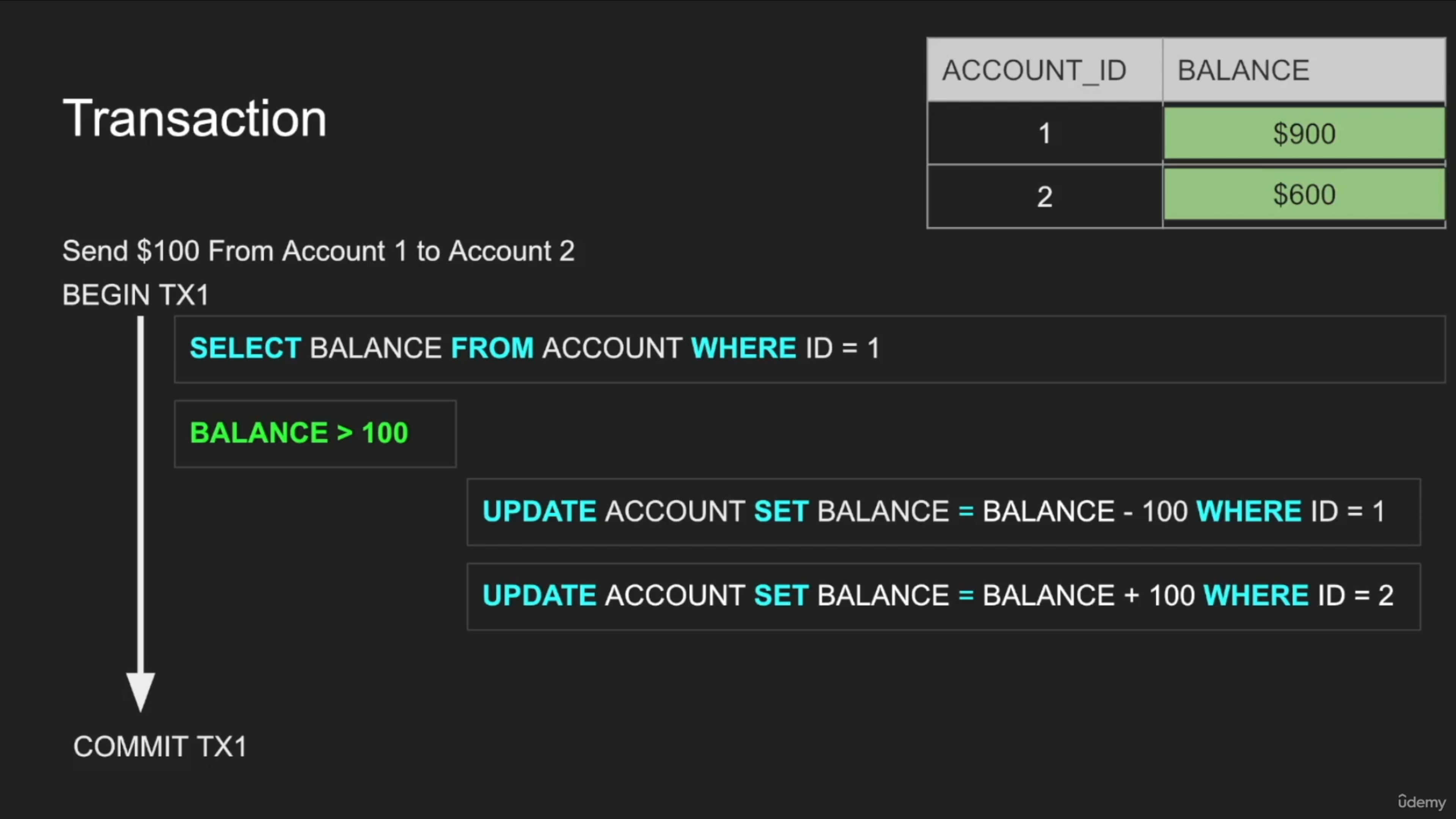
Transaction Lifespan
- Databases implement all these things differently << Think about how dbs might have implemented things (original thoughts!)
- Transaction
BEGIN
- A transaction always starts with
BEGIN
- Transaction
COMMIT
- Actually commits all the changes I made → makes it persist in the database
- Think about the work the db is actually doing to persist these changes
- As a student, how would you build this??
- Always think what is happening behind the scene!
- What if during commits, it crashes??
- Transaction
ROLLBACK
- Just flush anything in the memory ⇒Undo/Redo space
- Transaction unexpected ending =
ROLLBACK (crash)
Nature of Transactions
- Usually transactions are used to change and modify data
- But you can also have a read only transaction → to maintain consistency
- You want to generate a report and you want to get consistent snapshot based at the time of transaction
- If anything changes during the read-only transaction, it’s isolated so it’s ok