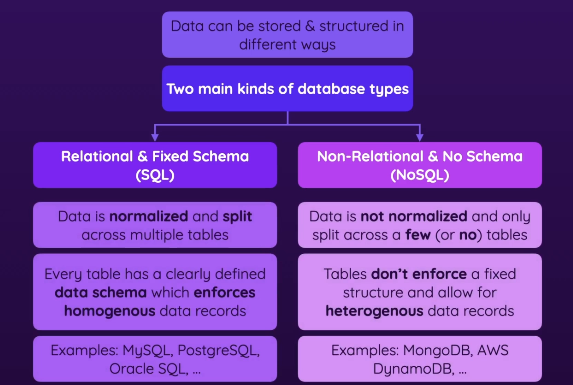
- diagram
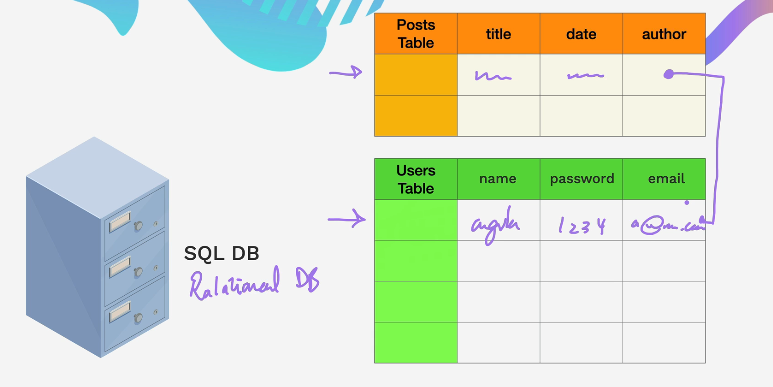
SQL DB / Relational DB
Definition
RDB (Relational Database) - “Like Excel” 📊
- Data is organized into tables with rows and columns, just like a spreadsheet. One row represents one complete data record. They are reliable and great for structured data.
- SQL
- u should plan the structure ahead of time → good for maintaining good code quality
- you add new lines (adding new record)
- Sharding
- an advanced technique for splitting a massive table across multiple servers to handle huge amounts of data
- complex to implement correctly
- they can form relationships
Popular databases
- oracle db (expensive), MySQL, SQLite, etc (some are open source)
- PostgreSQL (Postgres)
- one specific type of database that understands and uses the SQL language
- a popular and powerful open-source relational database management system
- you’d use SQL commands (written with the help of the
postgres.jslibrary) to interact with a PostgreSQL database
NoSQL DB / Non-relational
Definition
NoSQL - “Like a Notepad” 📝 -Newer category of databases that do not use a rigid table structure. They are flexible and can store various types of data
- diagram
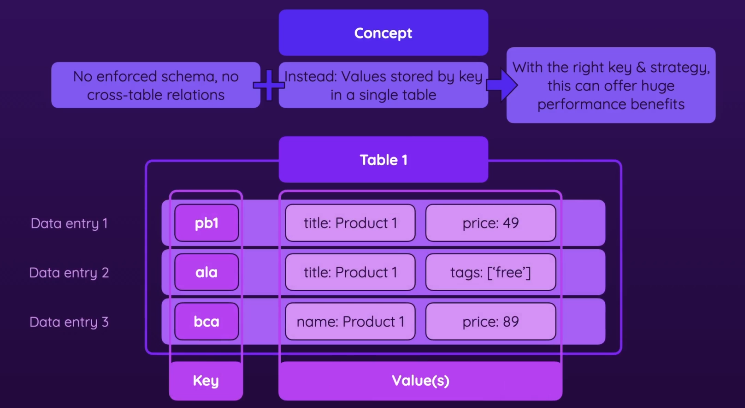
- one main advantage: flexibility & scalability
- structure
- uses things such as key/value pairs, or document models where u store everything in a single document (like a JSON)
- scalability
- you’re able to change the structure of your data afterwards without having to change the entire database
- not obliged to hold the original structure of the table that was created at the time when you decided to build a users table
- horizontally (having more fields) & vertically (more records) scalable
- used for real time data (flexible)
- created to address the pain ppl felt using sql db
- popular