Backend application
- The part of a system that executes on the server side and has the responsibility of managing data and serving client applications’ requests.
Main components
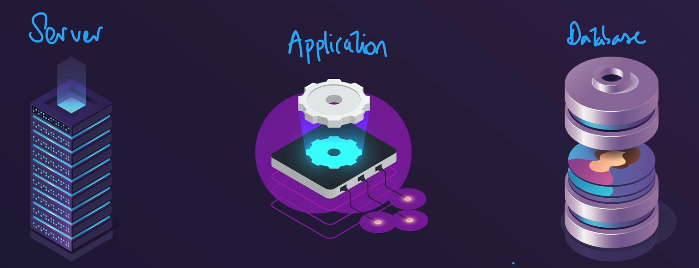
Server
Server
a big/powerful computer
- should be live 24/7, always listening for any requests - and connected to the internet, ready to receive requests.
- But it’s the application running on the server that actually processes those requests and decides how to respond.
- traditionally, servers are made and optimized for this particular purpose, but at the end of the day, any computer that is connected to the network can act as a server
- (Think AWS, DigitalOcean, or even your local machine during development.)
- Node.js - provides the runtime environment that executes your JavaScript code on the server
Application
Application
- all the logic that enables the web app to function & determines how you want the server to respond to the requests from the browser
- This is where your backend framework (e.g., Express.js, Next.js (fullstack! both frontend and backend!), Django, ASP.NET) comes in. It handles requests, processes data, and sends responses.
- it can respond with different things other than HTML
- data
- status code (404 - request invalid - application doesn’t know how to respond with the request)
Database
- permanent storage for web application
- can store/retrieve user data
- not a requirement, but becomes necessary as applications get more and more complex/larger
- Common databases include MySQL, PostgreSQL, 🍃MongoDB, etc.
- db는 백엔드 개발자에겐 심장과 같음 ㅋㅋㅋㅋ 그냥 무조건임…
- Related:Databases (AWS)
- 🗃️Database
Client-side and Server-side (request/response)
- diagram
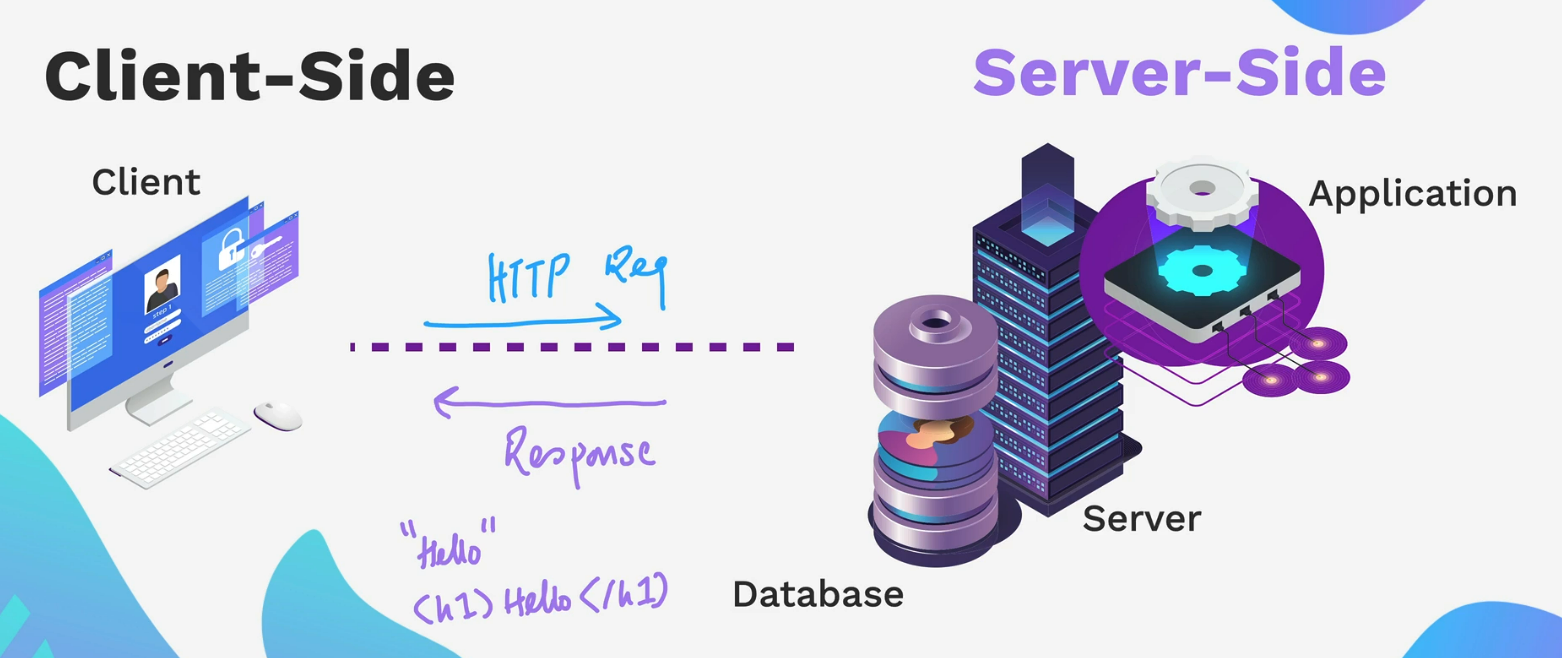
- In order to communicate between the client-side and server-side, we need HTTP requests that come from the client to the server
Client side (request) VS Server side (response)
- Client side
- the side which the user is going to access and interact with ur website
- desktop, laptop, mobile, etc
- Asks for a Request
- It’s when a device asks for a resource (data, image, HTML page, authentication token, etc)
- Requires a connection to the internet (wired, phone, smart connection, etc)
- Server side / server
- everything in the backend
- computer running server code, application, database
- Sens a response
- The reply to the request
- Could contain the resource (HTML, JSON, data, etc) asked for by the client
- Could contain a response saying that the client is not authorized (
401)
Example
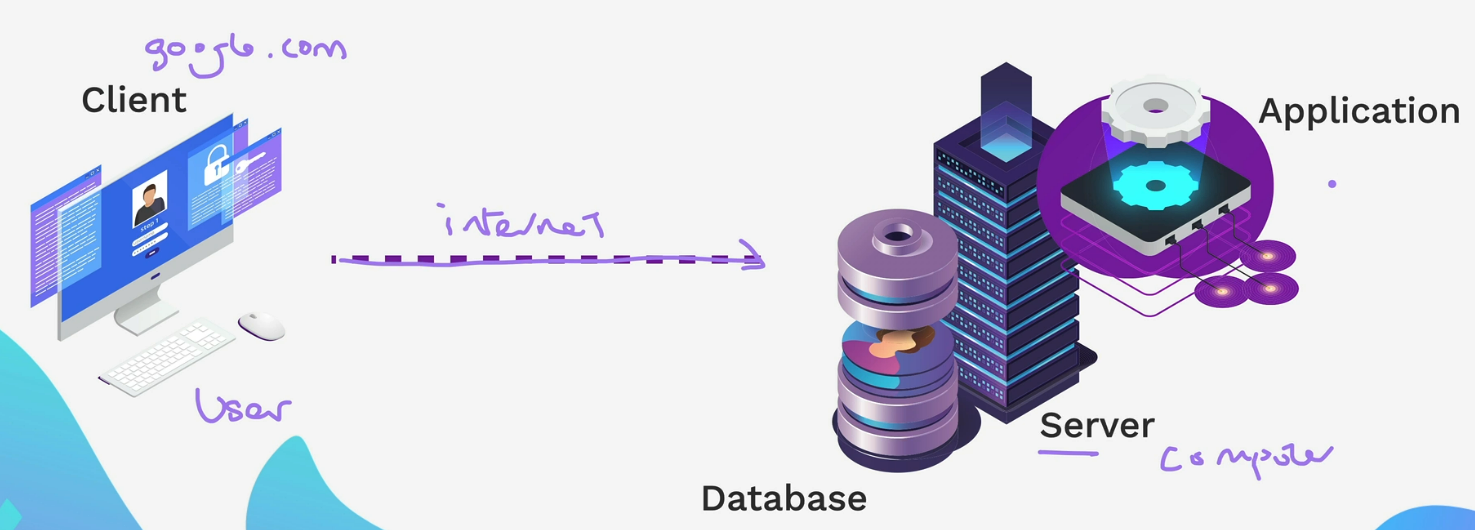
- user types in google.com
- this request goes thru the internet to google’s servers somewhere in the world
- on the server computer, there is an application running, listening for this particular request
- once it finds it, it sends back the homepage (index.html + css + js + etc) to the client