Overview
Application Programming interface
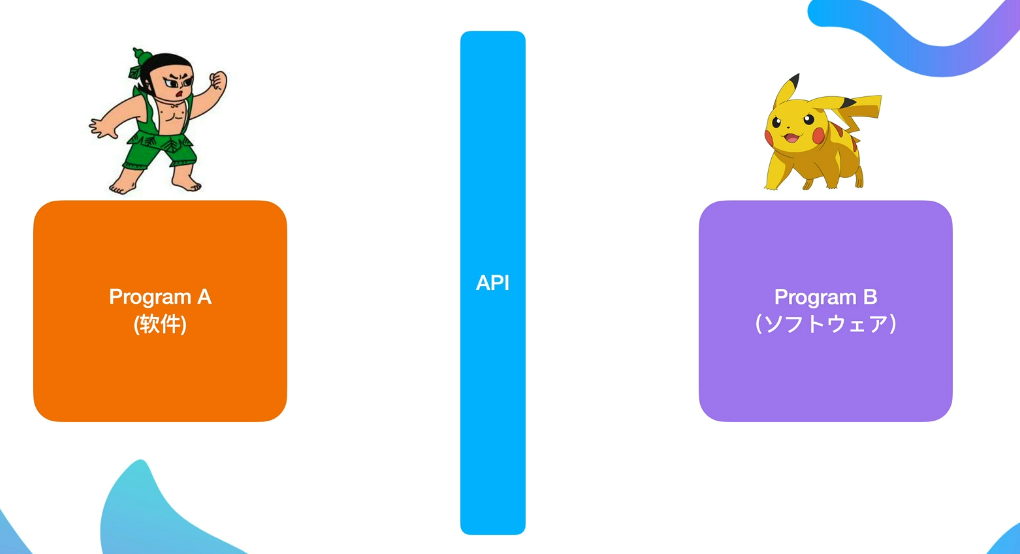
- It’s any tool that helps connect your program with someone else’s program
- Maps HTTP URL endpoints and HTTP Request Methods to specific actions
- Specifies how to make requests and how responses are structured
- Acts as a boundary/point of contact between two systems
- Diagram
Why APIs?
- Typical scenario
- Web/mobile app communicates with a backend HTTP API in the cloud
- Uses HTTP requests to trigger code and return data
- Usually built as REST or GraphQL APIs (can run on EC2, containers, or AWS API Gateway)
- Design tips
- Ask: “What essential information does the user need?” Hide everything else (database structure, encryption methods, etc.)
- URL, HTTP method, response codes, and body structure are all part of the API contract
- Method names should be self-explanatory—good design is obvious from the name alone
- Document with Swagger/OpenAPI for team collaboration (documentation skills are critical for developers)
- Even a controller endpoint without
interfacekeyword functions as an API contract
- Example use cases (common)
- Getting data from a server
- The server hosts “an API” - exposed “endpoints” we can access for getting data from the server
- Note that the server gives just the things they want to have
- Accessing pre-written code that does cool stuff
DOM API(DOM (Document Object Model), written by creators of JavaScript) - we don’t really know how this is happening under the hood but we can use this API to do stuff - like a black box- Array methods API (Array Methods)
- Any 3rd party packages
- Getting data from a server
Advantages
- Abstraction - Classes & Interfaces
- Hides the specific implementation details and shows only the necessary data
sendMessage(String userId, String text)→ we don’t care if it useskafka, a database, or whatever. We just use it.
- Encapsulation
- Can protect the implementation details so they are untouched from the outside
- Managing System Boundaries: Lowers coupling between modules, ensures structural independence
- Collaboration Tool: API specification acts as a contract between teams (shared JSON structure enables iOS, Android, Web to use the same backend)
- Reusability: Common API prevents chaos—e.g., backend handles address formatting consistently rather than each frontend doing it differently
Examples of API
🐣Spring & SpringBoot
Real World Use Case 1: Weather API
- your own diary website + software OpenWeather
- OpenWeather has an API that tells you how you can interact with their services
- you want ur app to automatically talk to OpenWeather’s server to bring their data into ur app ⇒ use an API
- ex. if u pass in latitude & longitude of the location you’re interested in, they can give u the weather for that location
- U should then just make a request from our website through this API, and get the data back to integrate into ur app
Real World Use Case 2: mailchamp API
- your newsletter + mailchamp
- u want to send ur email using mailchamp, and u want to send the email u collect each time on ur website into a database on ur mailchamp account ⇒ API
- MailChimp defines an API that tells u how u should structure ur POST requests & what kind of responses u’ll get back in different situations (maybe a success code like 200)
- example in code
app.get('/users', (req, res) => {
  res.json([{ id: 1, name: 'Alice' }]);
});
- This API endpoint listens for a GET /users request and responds with a JSON list of users.
Types of APIs
- The term API doesn’t just mean HTTP. Anything that acts as an interface in a specific environment—like at the system level, within a programming language, or for a database—is also an API
- When integrating with external services, you must check for requirements like API key issuance, authentication methods (e.g., OAuth2, JWT), and rate limiting
-
- Most APIs provide official documentation, example code, and sample responses. The key to mastering any API is getting into the habit of reading the documentation thoroughly.
Operating System API (System API)
- The Operating System (OS) API is a system call interface that allows user programs to access hardware or kernel functions.
- Example: File System Access (☕Java)
Files.write(Paths.get("log.txt"), "Hello".getBytes());- Internally, this wraps the OS’s
write()system call. - In 🐧Linux, functions like
open,read,write, andcloseexist for this purpose.
| Operating System | API Package | Description |
|---|---|---|
| Windows | Win32 API | API for accessing Windows windows, files, and networks. |
| Linux | POSIX API | System API for terminals, processes, threads, etc. |
Programming Language API
- Example: Java Collection(List) API
- It has methods like
.add()and.clear()& we don’t need to know how they are implemented
- It has methods like
| Language | Representative API | Description |
|---|---|---|
| Java | JDK API (java.util, java.io) | All classes provide API documentation based on Javadoc. |
| Python | Built-in modules (os, math) | Composed of standard, built-in APIs. |
| JavaScript | DOM API, Web API | APIs provided by the browser (e.g., document.querySelector()). |
Database API (DB API)
- An API that allows an application to communicate with a 🗃️Database.
- Example: Java JDBC API
- DB APIs are provided at various levels, from simple SQL execution to higher-level ORM (Object-Relational Mapping) abstractions.
Web API (HTTP API)
- API that enables communication over the internet and is the most popular and widely used type.
- Common architectural styles include REST API, GraphQL, and SOAP.
- Example: REST API Call (JavaScript Fetch)
- The client makes a request via HTTP.
- The server responds with data, often in JSON format.
fetch("https://api.weatherapi.com/v1/current.json?q=Seoul")
  .then(res => res.json())
.then(data => console.log(data.current.temp_c));- Just refer b ack to this: HTTP Fundamentals
API Architectures
Approaches of building APIs - distinct high-level patterns for designing APIs (how applications communicate)